
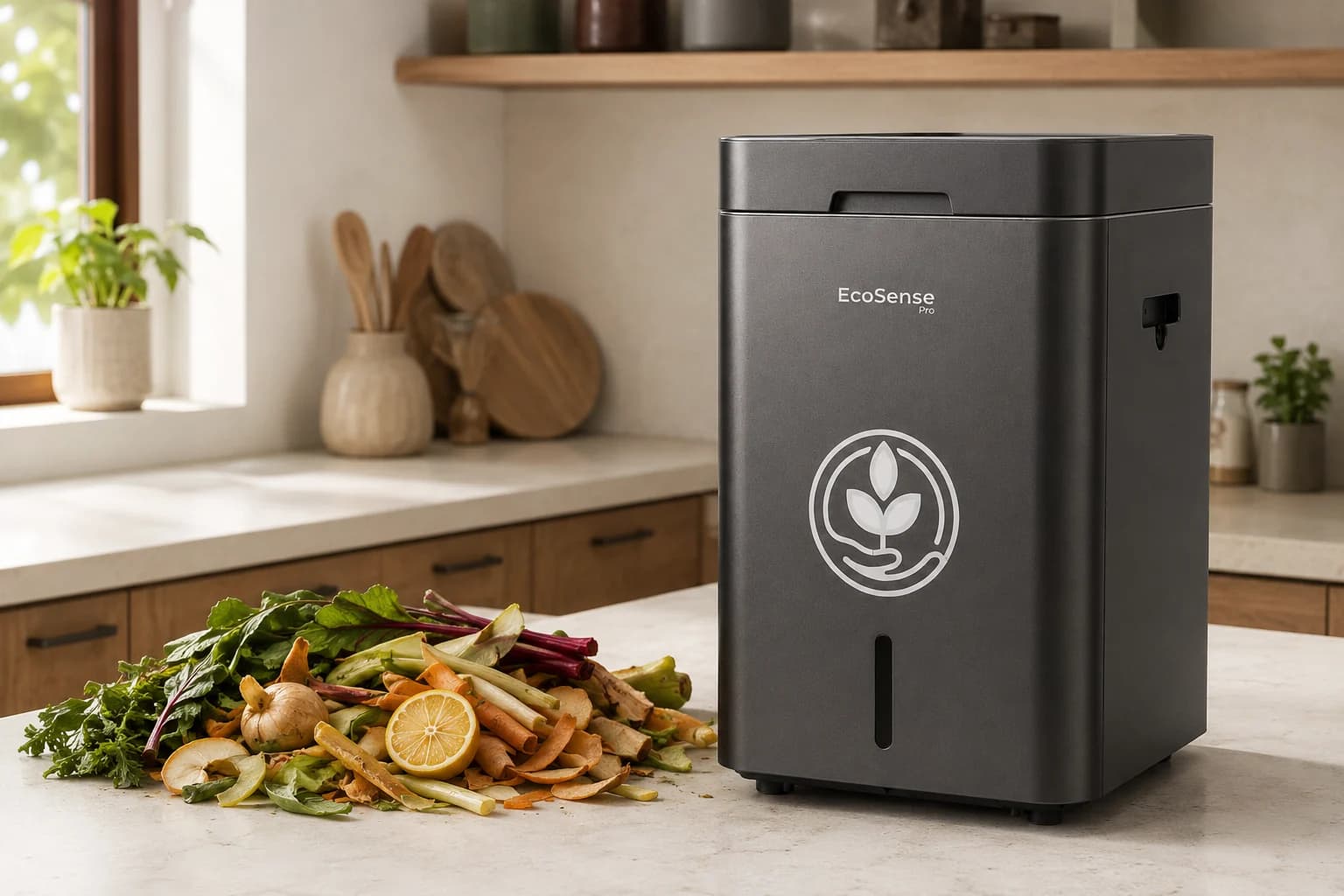
Every evening, in millions of Indian kitchens, the same small ritual repeats itself: vegetable peels, leftover rice, the ends of things nobody will eat, scraped into a bin without a second thought. It's such an ordinary moment that it barely registers. But add it up across a country of 1.4 billion people, and that ordinary moment becomes something else entirely: a crisis most of us never see the scale of.
A Number Too Large to Picture
India wastes an estimated 78–80 million tonnes of food every year, worth roughly ₹1.55 lakh crore. That makes India the second-largest food-wasting nation in the world, behind only China. And it sits alongside a harder number to reconcile: 194 million Indians remain undernourished, placing the country between 102nd and 111th out of roughly 125 nations on the Global Hunger Index.
Two facts, both true, in the same country, in the same year.
Where It Actually Goes
Food waste doesn't disappear when it leaves your kitchen. It goes to landfill, and India's landfills are not a small problem quietly managed somewhere out of sight. Delhi's Ghazipur landfill has grown to roughly 65 metres tall, nearly the height of the Taj Mahal. It reached its intended capacity back in 2002. It is still receiving over 2,000 tonnes of waste every day, and it regularly catches fire. Ghazipur isn't an outlier. It's the pattern. Around 3,000 landfills across India are in a similarly overflowing state.
There's a hidden cost buried in those numbers too: methane. When food waste breaks down in a landfill without oxygen, it releases methane, a greenhouse gas up to 80 times more potent than CO₂ over a 20-year period. India now produces more landfill methane than any other country on earth.
The Fact That Changes Everything
Here's the number that matters most, because it's the one that puts the solution back in reach: 60% of all food waste in India happens at the household level, not in restaurants, not in retail and not in industrial food processing. In our own kitchens.
Which means the single biggest lever in this entire crisis isn't a new government policy or an industrial-scale intervention. It's what happens on a kitchen counter, every evening, in millions of ordinary homes.
An Old Answer, Closer Than You Think
This isn't the first time Indian households have had to answer the question of what to do with what's left over. In Tamil Nadu, generations of families turned surplus onions, spices, and even leftover rice into vadagam, sun-dried over days, stored, and used all year. Nothing was wasted because there was never a version of the kitchen where waste was acceptable.
Composting is simply that same instinct, updated for a modern kitchen: turning what's left over into something useful again, just faster.
What This Means for You
You didn't create India's waste crisis, and no single household can fix it alone. But the 60% statistic means something important: the kitchen counter is not a small, symbolic place to start. It's the actual, literal place where most of this problem either continues or stops.
That's not a reason for guilt. It's a reason for agency: the rare kind of environmental fact that comes with an answer already built in.
Your kitchen scraps don't have to become someone else's problem.